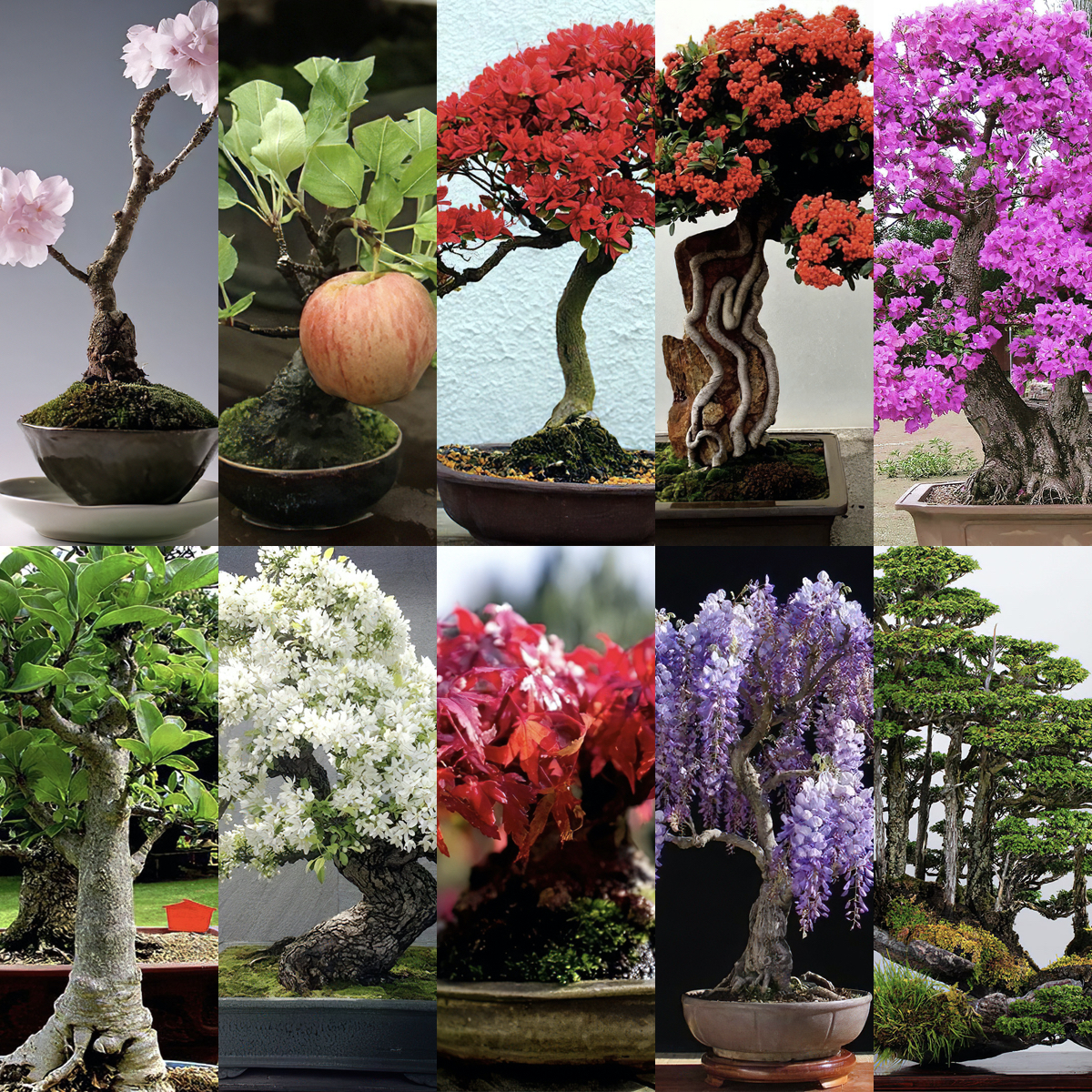
We have compiled a ranking of the 10 most beautiful Bonsai trees ever! There are flowering, fruit and evergreen plants, a real sight for our eyes!
A bonsai tree is a work of art, and this ranking confirms it. We wanted to collect 10 of the most beautiful bonsai trees in the world to introduce you to some incredibly special species and to give you some advice in case you would like to try your hand at growing one of the ten specimens on the list. Some of them are true masterpieces of nature, but still children of the hand of man and his technique, of procedures and technologies applied with wisdom and a lot of patience. The 10 most beautiful bonsai trees in the World fascinate in terms of color, stature and realism, the latter being a highly considered characteristic in the judgment of bonsai. Here are the rankings, let's start from the bottom!
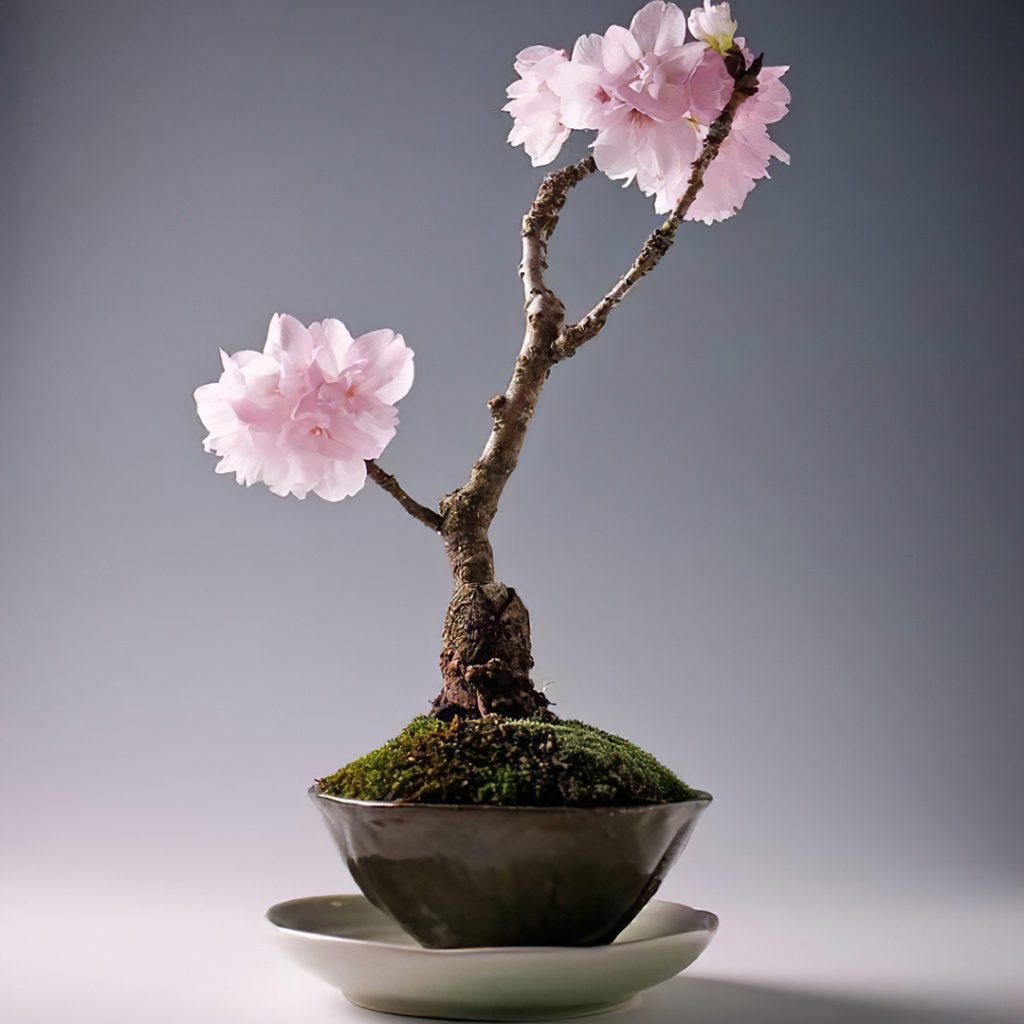
#10 Bonsai Sakura
The short period when cherry bl ossoms (Sakura in Japanese) bloom has become a fixation in Japanese culture. The fascination comes from the copious flowering and the red fruits that ripen in summer. There are many varieties, however, only a few are suitable for bonsai cultivation, namely those with small fruit: Prunus Sakura (generically used to summarize all varieties of the species from Japan), Prunus Mahaleb, Prunus Cerasifera. Its majestic blossoming is paired with samurai qualities: Purity, Loyalty and Courage.
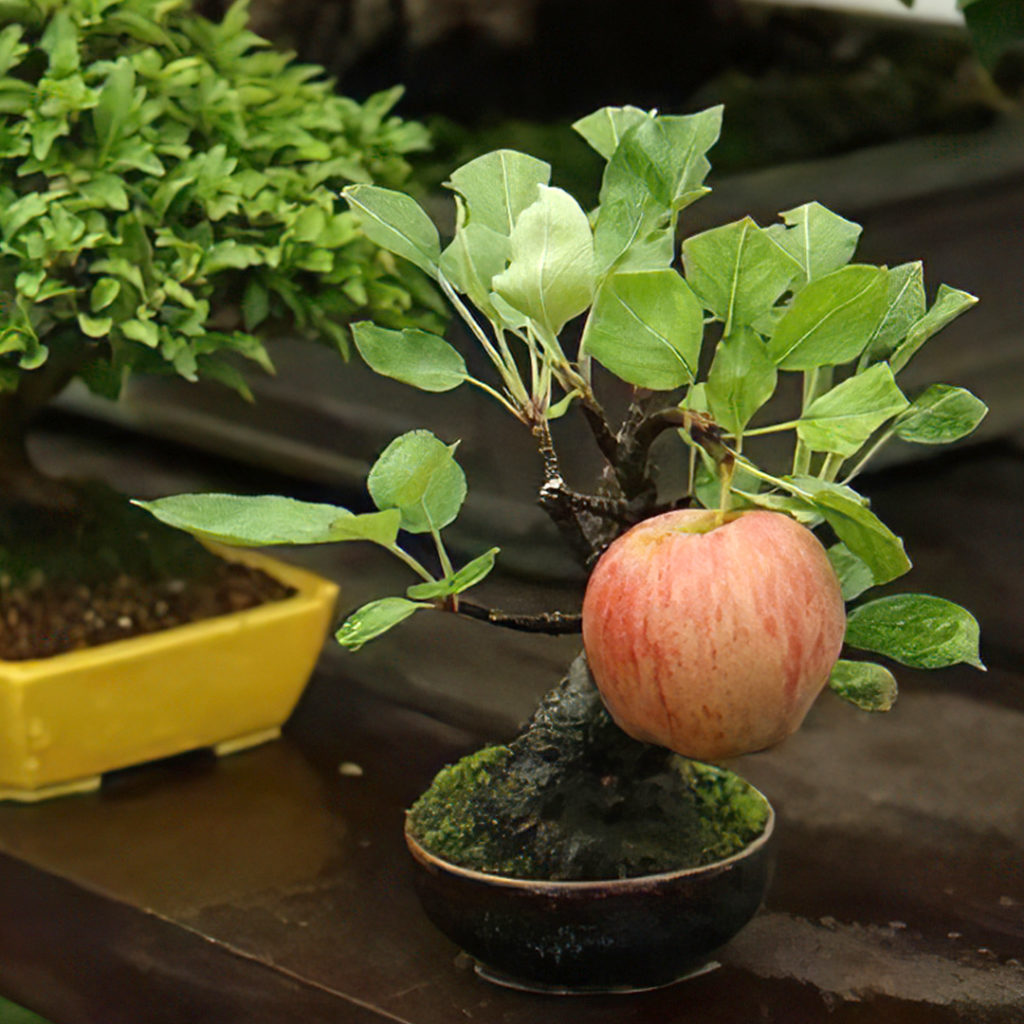
#9 Apple Bonsai
The apple tree is a species of tree that is very well suited to the bonsai setting. It is a tree that grows a lot and in bloom pleases the eye with its delicate light-colored flowers. In particular, apple tree species suitable for bonsai are: the Malus Sylvestris (wild apple tree), and different types of ornamental apple trees such as Malus Toringo, Malus Halliana, Malus Cerasifera. Suitable pots: The best pot is a handmade pot that can withstand colder temperatures since it is an outdoor bonsai tree, externally glazed, as dictated by master bonsai growers, in neutral, natural colors. The shape should recall the rounded foliage of the apple tree, so the pot should be round or oval.
#8 Azalea Bonsai
TheAzalea Bonsai is a plant much loved by bonsai growers, mainly because of its copious flowering that can be admired during the spring period. The colors of the flowers range from white to pink to red, with various shades of intensity. The wrinkled and elegant trunk, dense and small foliage, fast growth and versatility to upbringing in different styles are other characteristics that make this flowering plant a favorite among bonsai growers. Varieties used for bonsai cultivation are: Azalea Satsuki or Rhododendron Indicum and theAzalea Kurume or Rhododendron Kiusianum. The azalea, however, is an acidophilic plant and cannot be grown just anywhere. During the day it should be placed in a bright, dry place with no draft, and at night the important thing is not to subject it to heat shock. I suitable pots to hold the roots of these beautiful azaleas are round, circular or oval pots and preferably tall to promote flowering. The color should match the shade of the flowers, and since this is a flowering bonsai, you can also opt for a bright glaze.
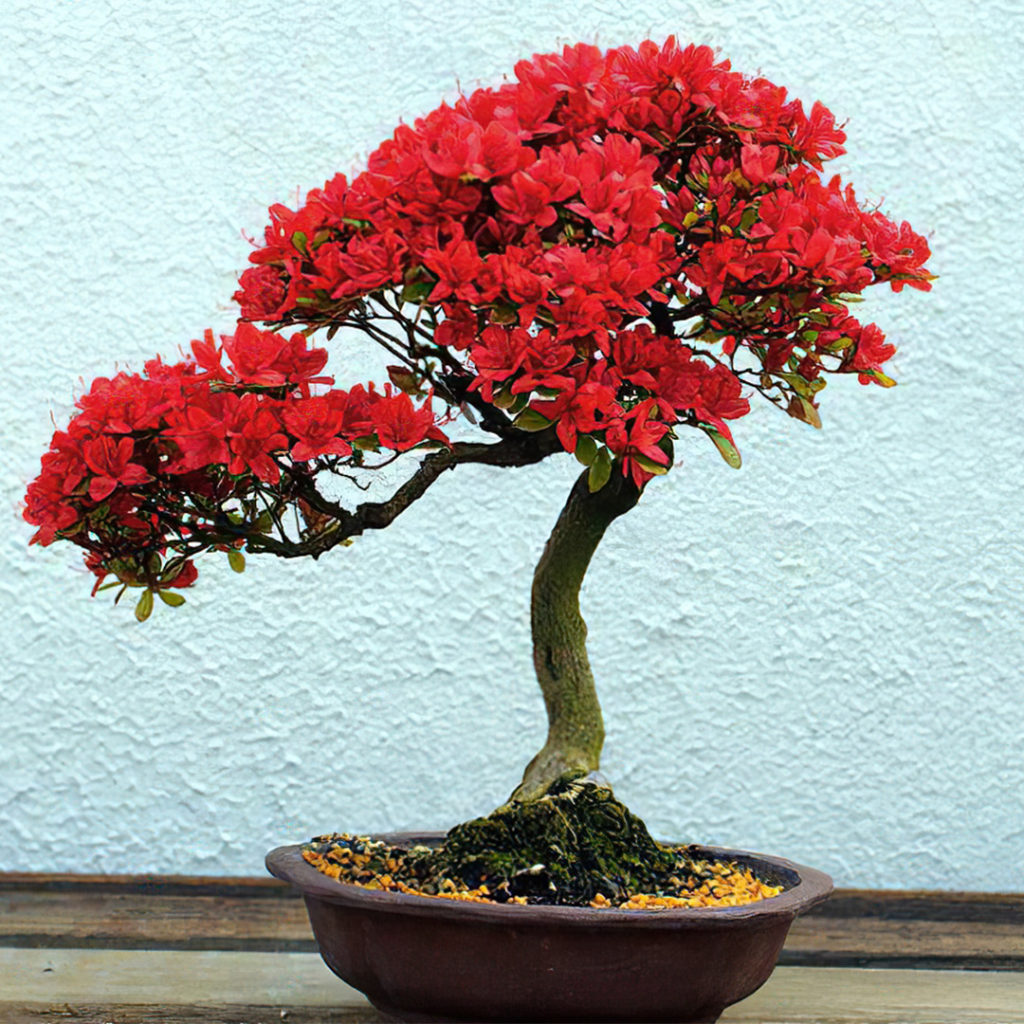
#7 Hawthorn Bonsai.
Hawthorn (scientific name: Crataegus Monogyna) is a plant that develops as a medium-height shrub in nature. Its small foliage, white or red flowers that anticipate berries before pollination, and dense branching make hawthorn a very distinctive tree for becoming a bonsai tree. But you know, though, sometimes the greatest satisfactions come from great difficulty; in fact, hawthorn is very difficult to pull from the ground to adapt for a bonsai culture. Many specimens die shortly after being harvested from the ground, so experience and caution are essential if you want to harvest a hawthorn. The problem is solved by taking advantage of the seeds contained in the berries, which once planted during the spring period will give rise to the shoot of this magnificent shrub. The appropriate pot for the Hawthorn Bonsai is an abundant, glazed pot of a natural color since it is a bonsai to be kept outdoors. Hawthorn is very resistant to temperature changes and tolerates sunlight very well, but be careful not to overheat the roots. In fact, it is advisable to shelter the pot from the sun during the summer period, or to have the plant exposed to the sun during the morning and during the afternoon to remain in a shaded area.
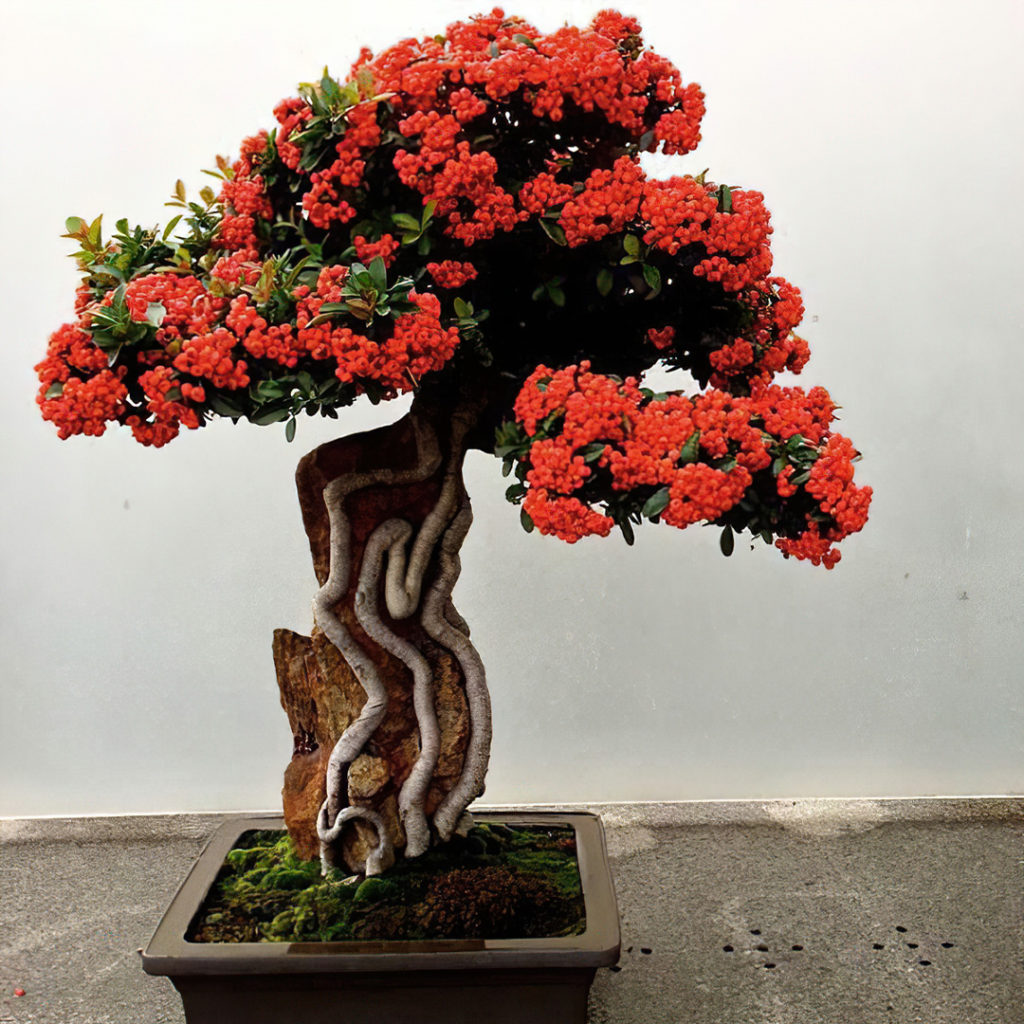
#6 Bonsai Bougainvillea
Just below the middle of this ranking we find another flowering Bonsai, the Bougainville: a spectacular plant of tropical origin. It was discovered relatively late, in 1768 to be exact, when French Admiral de Bougainville noticed this wonderful climber gracing the gardens of Tahiti. Bonsai cultivation of the Bougainville presents difficulties. Because it is a tropical flowering plant, it must be exposed in a sunny location, and when the temperature drops it is necessary to withdraw the plant indoors and cloak the shrub with insulating material. For northern bonsai in fact (or at any rate residing in cool places) Bougainville is to be considered as an indoor plant. A very interesting curiosity concerns what may look like beautiful purple petals, but are actually brateae, or modified leaves that grow around the real flower, which is tiny and yellow, with the function of protecting it and attracting insects to pollinate it. In bonsai cultivation, Bougainville is a plant that gives much satisfaction: the charming flowering, the lush growth and the foliage that gradually shrinks as the shrub grows are features that make us delight in their sight. Let us remember, however, that expecting abundant flowering from a plant requires a huge strain on its energy requirements at that particular stage. The plant must reach the spring flowering period in its full strength, so it must be fertilized and treated wisely throughout the year, and once its flowers have emerged, we must avoid moving it from time to time; any movement is received by the flowering foliage as a great stress. The pot to use for the Bougainville Bonsai is a fairly deep pot with a bright color, since it is a flowering bonsai, if you are storing it indoors because of the cold temperatures, glazed or glossy colors are preferred. Give our blog article a read to learn how to best choose the right pot for your bonsai.
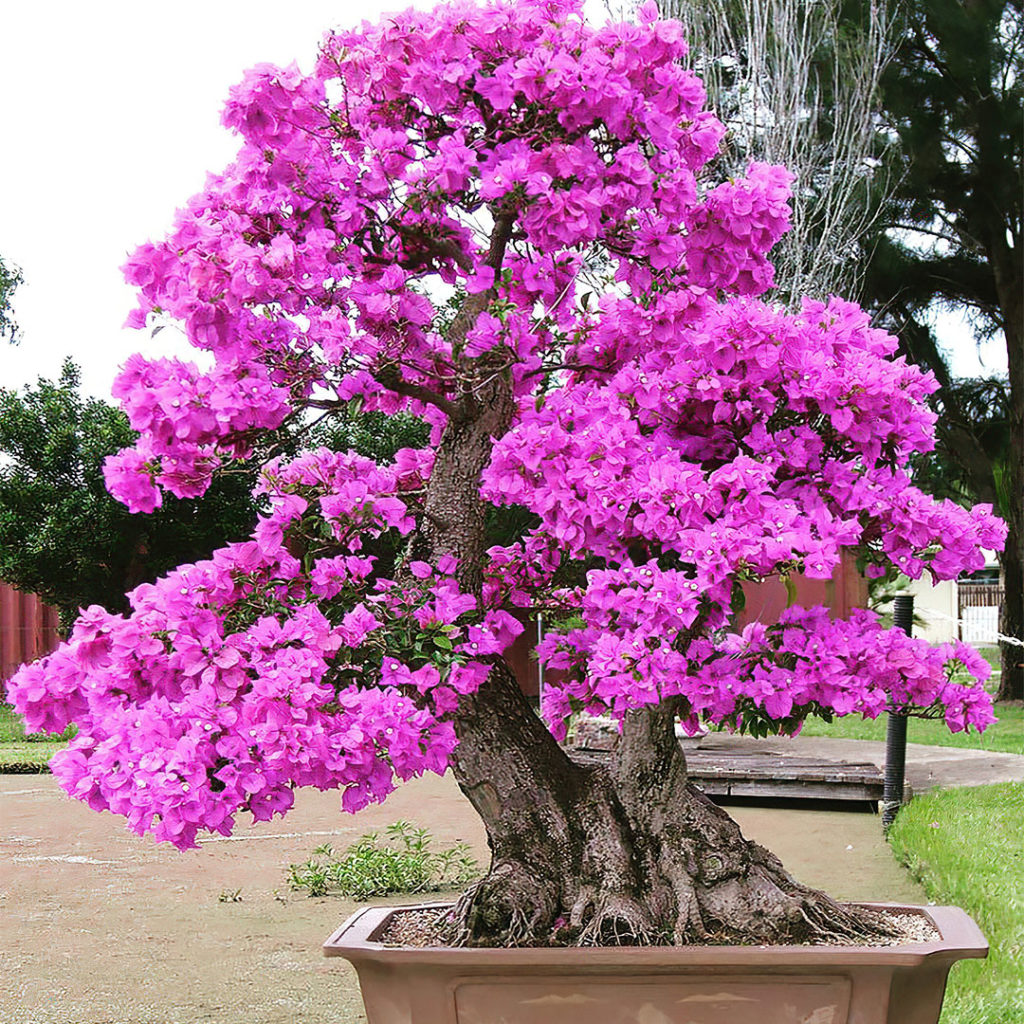
#5 Baobab Bonsai
A fascinating specimen to say the least! Native to continental Africa, the Baobab is a tree that can reach up to 30 meters in height and 7 meters in diameter in the wild. It is considered the "Tree of Life" because it can survive for up to 10 years in extreme drought conditions given its ability to retain up to 120,000 liters of water. The best Baobab species that lends itself to miniature cultivation is the African Baobab (scientific name: Adansonia Digitata), which is the most common bonsai tree found in Africa. It is possible to create a Baobab bonsai by planting the seed in a very well-draining soil and storing it in a bright place. The correct time to do the planting is in spring, and it is advisable to soak the seed in warm water for 24 hours before planting to promote germination. The most magical and fascinating aspect of the Baobab is its flowering. The tree remains bare throughout the dry season and then fills with leaves for a few months of the year, coinciding with this period is also the flowering, which lasts only 24 hours. The baobab's flowers open only at night, are very fragrant and live for a full day and then dry up. Given its rather short life span, various legends have been attached to the Baobab flower, including the belief that the inflorescence is inhabited by magical spirits, that it serves to drive away crocodiles, and even that anyone who dares to pick it during its 24-hour life span will be mauled by a lion. A wonderful plant for the 5th place in our ranking!
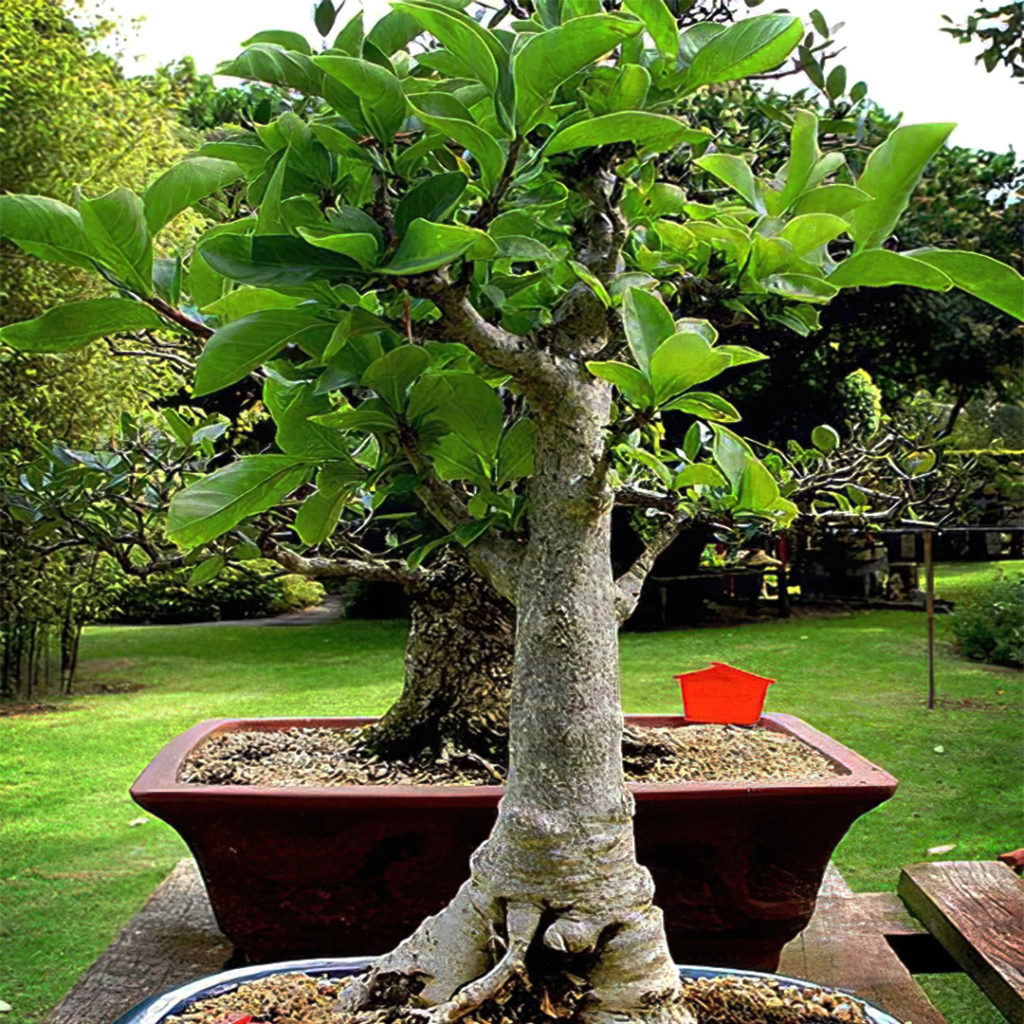
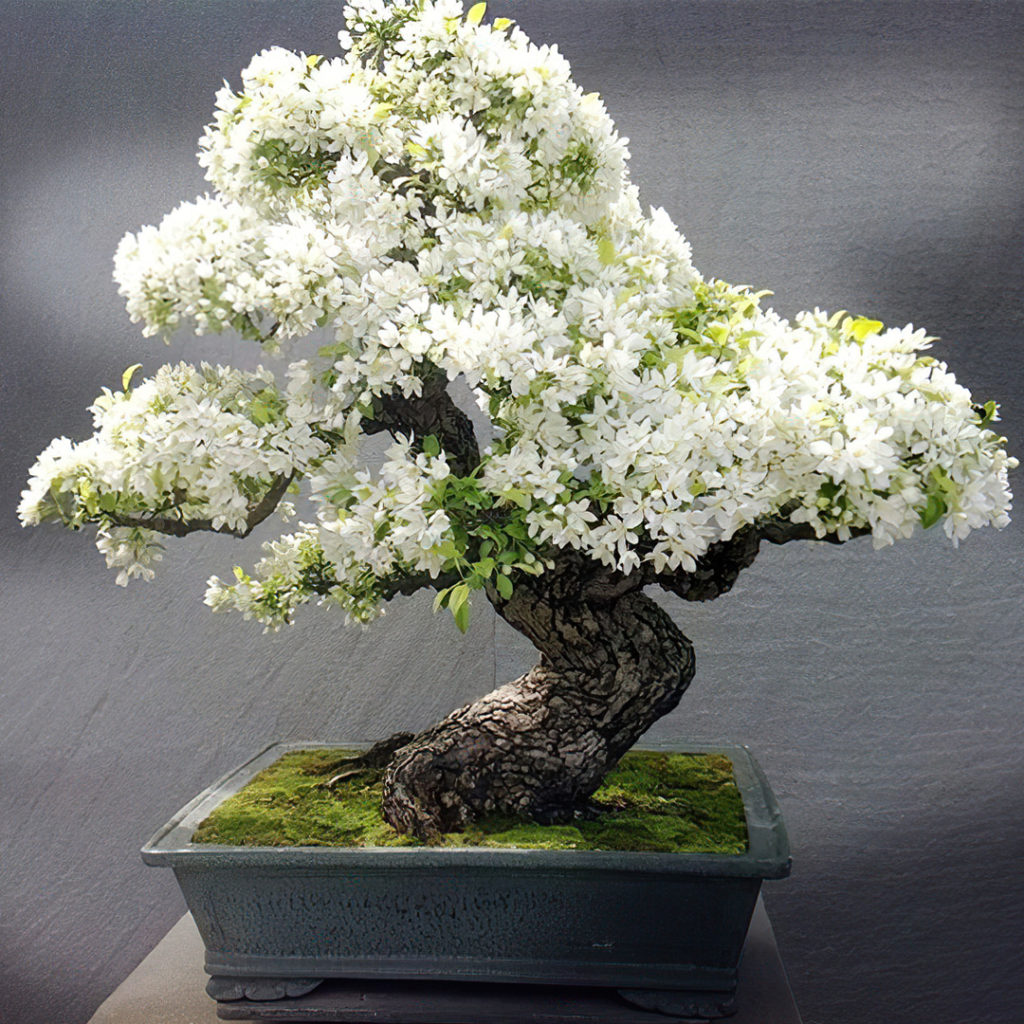
#4 Apple Blossom Bonsai
It is a unique thrill to stand in the presence of its lush bloom, which is why we decided to include two versions of this beautiful bonsai in our ranking. Its graceful fruits make the apple tree a unique species. No plant can boast the same qualities as the apple tree: a bonsai tree that is easy to grow even for novice bonsai growers, strong resistance to pest attacks, and early, lush and fragrant flowering. The apple tree's flowers cling to the branch for many months and then, with nature's help, give birth to one of the world's most widely consumed edible fruits. During its flowering in the spring period, it is advisable to keep the apple tree in the sun to encourage its vegetation. In the summer period, on the other hand, although the apple tree is quite resistant to heat, the plant should be withdrawn to a shady area because the roots are much more delicate than the trunk and branches. So during hot periods, it is advisable to at least cover the pot to shelter the roots. In this case, as in many other bonsai species, the composition of the pottery in the pot is crucial to best treat the plant's roots.
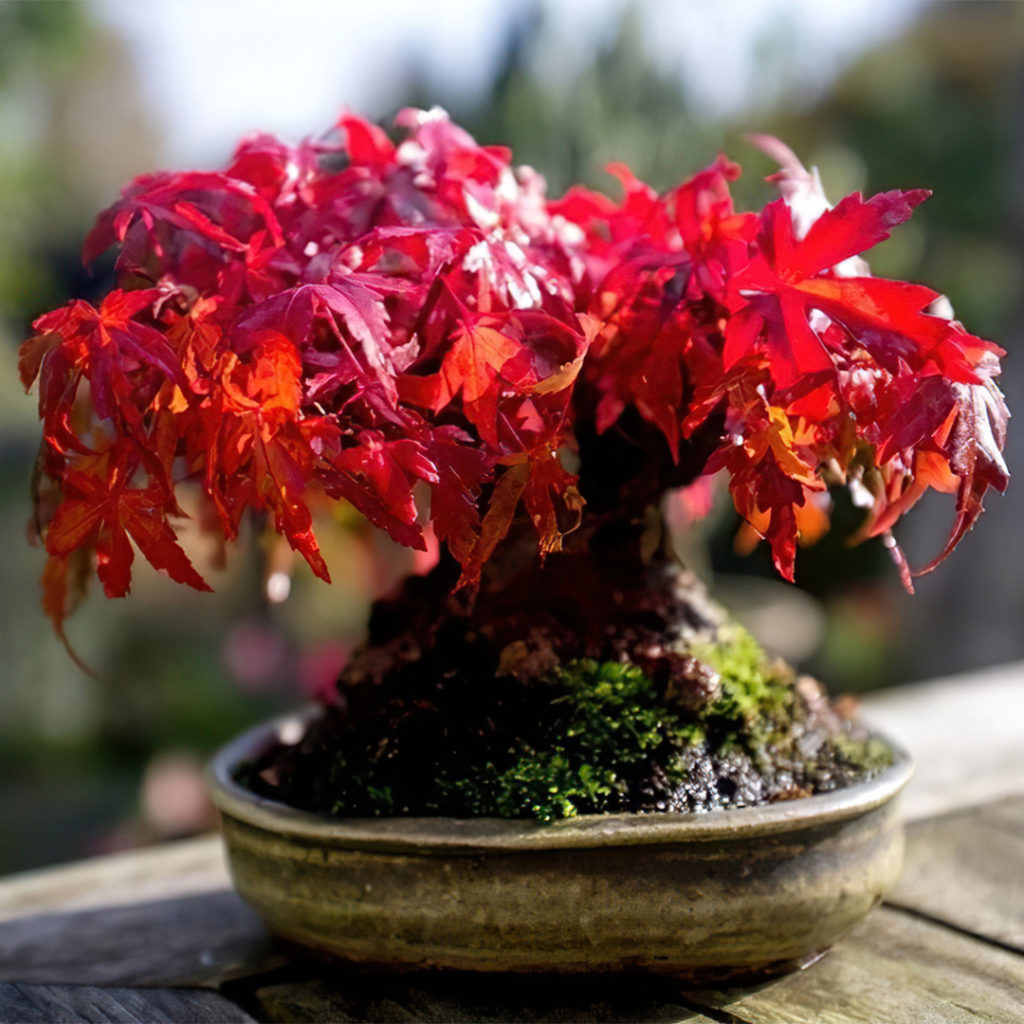
#3 Japanese Red Maple Bonsai.
Japanese Red Maple is one of the most popular species among bonsai growers, withMaple Palmatum in particular being the one most commonly used in miniature cultivation. The maple is a very elegant and striking ornamental plant; its distinctive red leaves change coloration with the seasons, taking on intense shades from purplish red to crimson red. The dense fol iage consists of five-pointed palmate leaves with very prominent veins. Bonsai cultivation of the red maple requires no special care other than basic precautions for lush, long-lasting growth. It is a plant that should be placed in a sunny location for most of the year, whether kept indoors or in an open space. In the summer time, however, it should be moved to a shady place so that the leaves are not affected by the excessive heat of the sun and burn as a result. Pruning should be done during the vegetative dormant period, which is from November to early February, to allow the plant to present itself to spring in the best possible way. Obviously, like any bonsai the Red Maple fears water stagnation, which results in waterlogging of the roots; in the summer, constant watering is important, while in the cooler months it is sufficient to keep the soil moist. Some interesting trivia concerns the meanings that the red leaves of the Maple tree take on in different cultures: in China they are associated with the concept of nobility and dignity; in the Japanese island, on the other hand, they take on the figurative meaning of the passage of time; and in Canada, a state that has made the Maple leaf its flag, they take on the meaning of eternal friendship, support, understanding and loyalty.
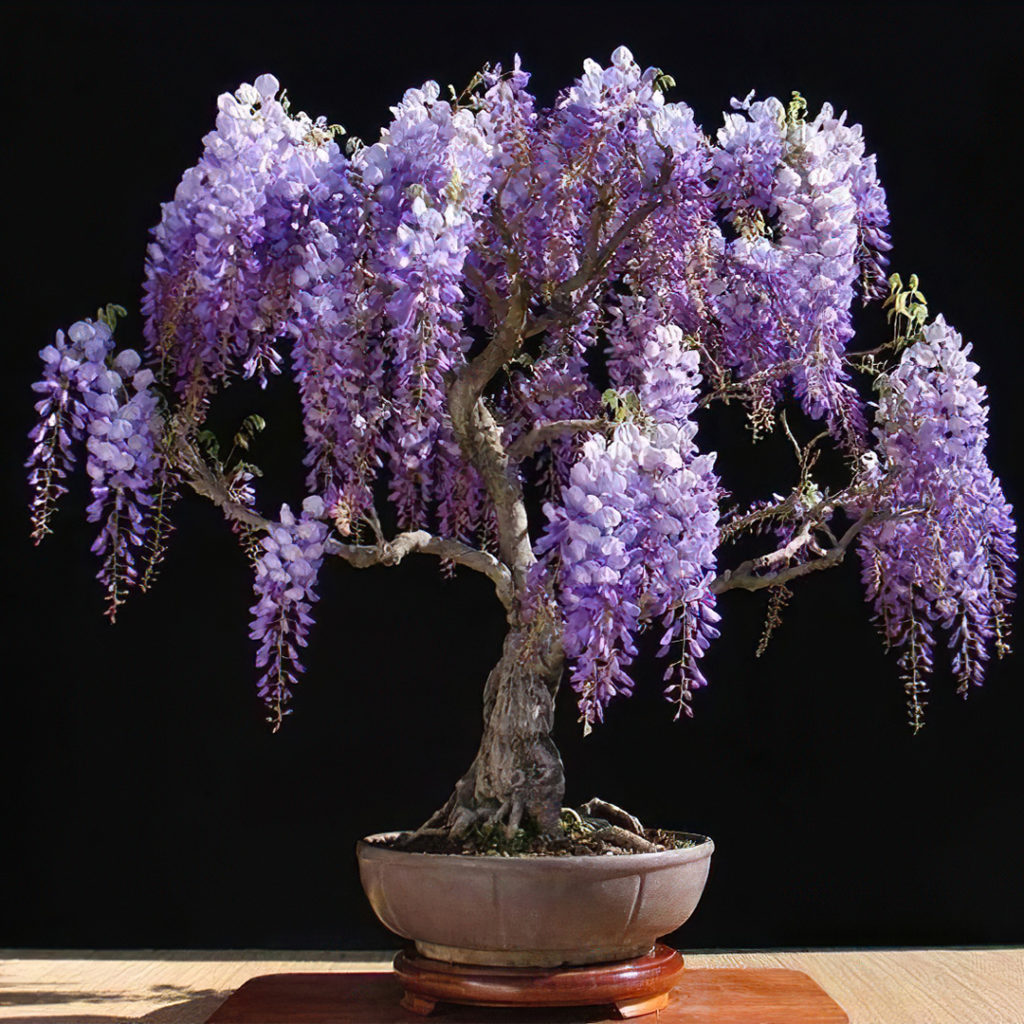
#2 Wisteria Bonsai
Second place in this ranking is occupied by a species that is nothing short of extraordinary, a bonsai with very distinctive characteristics, the Wisteria bonsai (scientific name: Wisteria). In the wild, the Wisteria is a climbing plant but it adapts to miniature cultivation with versatility. The two most common species in the bonsai world are Wisteria Sinensis and Wisteria Floribunda. The reminder of its climbing nature can be seen in the twisting of the trunk, it twists with the passage of time giving the plant a rustic and ancient appearance although it is not many years old. The most jaw-dropping feature, which is also the reason why this plant is on the second step of the podium, is definitely its fantastic flowering: a wonder for the eyes. The floral display can be admired in spring, when the branches are still bare of foliage. Its pods literally burst and spill their seeds when ripe, kicking off a colorful show of white, pink or purple. After the flowering period, the trunk and branches are covered with long leaves. For the growth of Wisteria it is essential to place it in full sun during the growing season, also a good amount of water is absolutely necessary, especially during the summer period. During the warmer period, it is advisable to place the bonsai on a saucer and each time you water, fill the bowl underneath as well. Wisteria has a special meaning in Eastern culture, according to tradition, ancient emperors used to bring wisteria bonsai trees as gifts as a sign of friendship, benevolence and willingness to dialogue. I would say a gift, very welcome, no?
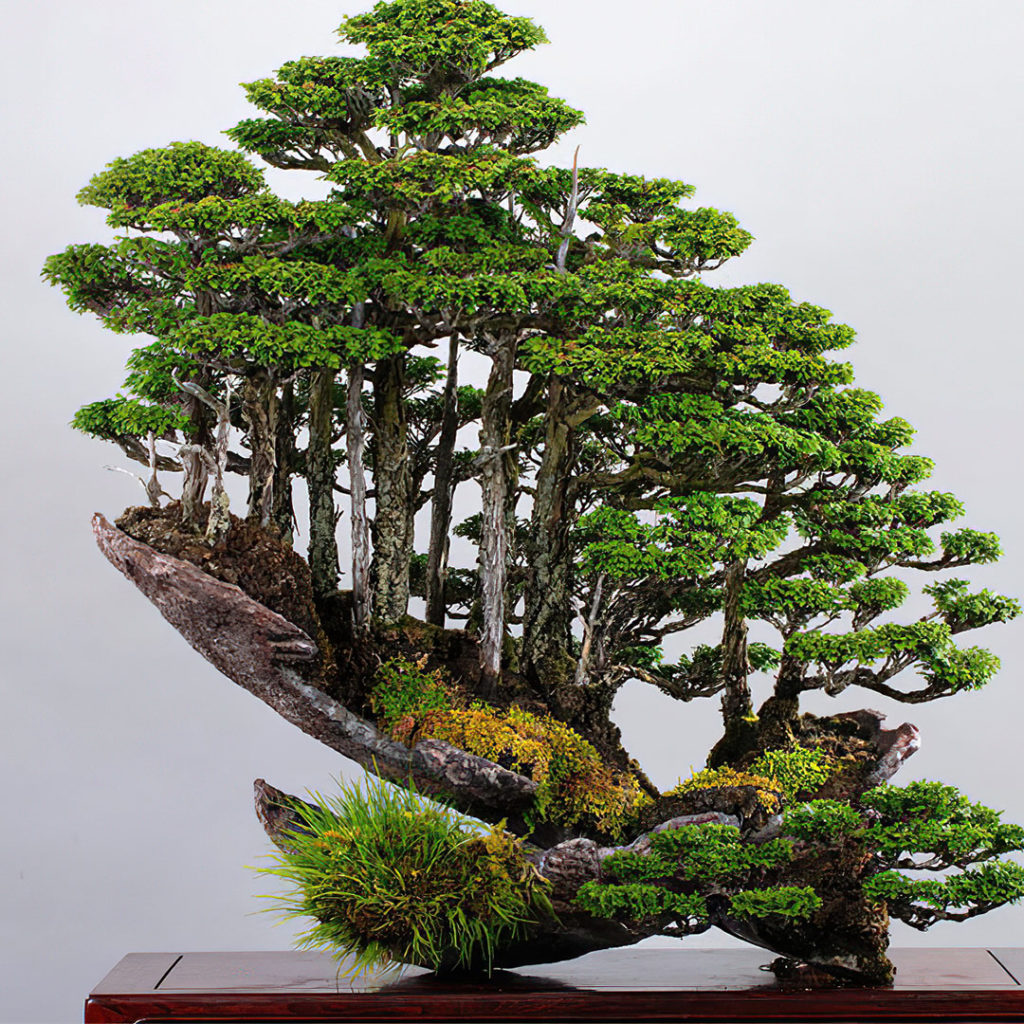
#1 Bonsai Forest of Hinoki Trees - Author: M. Kimura
On the top step is a true work of art. The spectacle of nature combined with the experienced hands of a pioneer in the art of bonsai, one Masahiko Kimura, are able to bring to life this enchanting forest of Japanese Cypress trees. The Hinoki Cypress (scientific name: Chamaecyparis obtusa) is one of the most suitable species for Bonsai cultivation, a beautiful, thick and jagged bark wraps the trunk up to the branches populated by scaly vegetation with a deep, bright green color. Chamaecyparis is a light-loving tree, except in the summer months, during which if you expose it to the sun you risk burning the foliage. The Japanese Cypress is considered a sacred tree in the religion of Shintoism, a cult that preserves the mindset of the ancient Japanese. One myth has it that Susanoo-no-mikoto, God of forests and hurricanes, distributed hairs from his body to his descendants to plant in the ground so as to populate the Japanese land with trees and forests. From the hair of his chest came the Hinoki Cypresses. To this day, 65 percent of Japan's territory is composed of forests, most of which are considered to be home to Shinto religious sacredness. Masahiko Kimura, author of this composition, is recognized as one of the leading international exponents of contemporary bonsaiism. A master for many modern-day bonsai experts who have learned techniques and innovations from Mr. Kimura. Even at an early age he studied traditional bonsai growing techniques, but once he learned the basics, he decided to change the rules of the game and go beyond the strict dictates of the "old school" by incorporating new materials into his compositions, as can be seen in this cypress forest that rests on carved wood and not on a traditional ceramic pot. Kimura was not immediately understood and appreciated for his innovation, especially in his homeland, Japan, where the tradition of bonsai art is to be considered sacred. In time his brilliant talent was recognized internationally and he is now considered one of the leading innovators in contemporary bonsai art.