
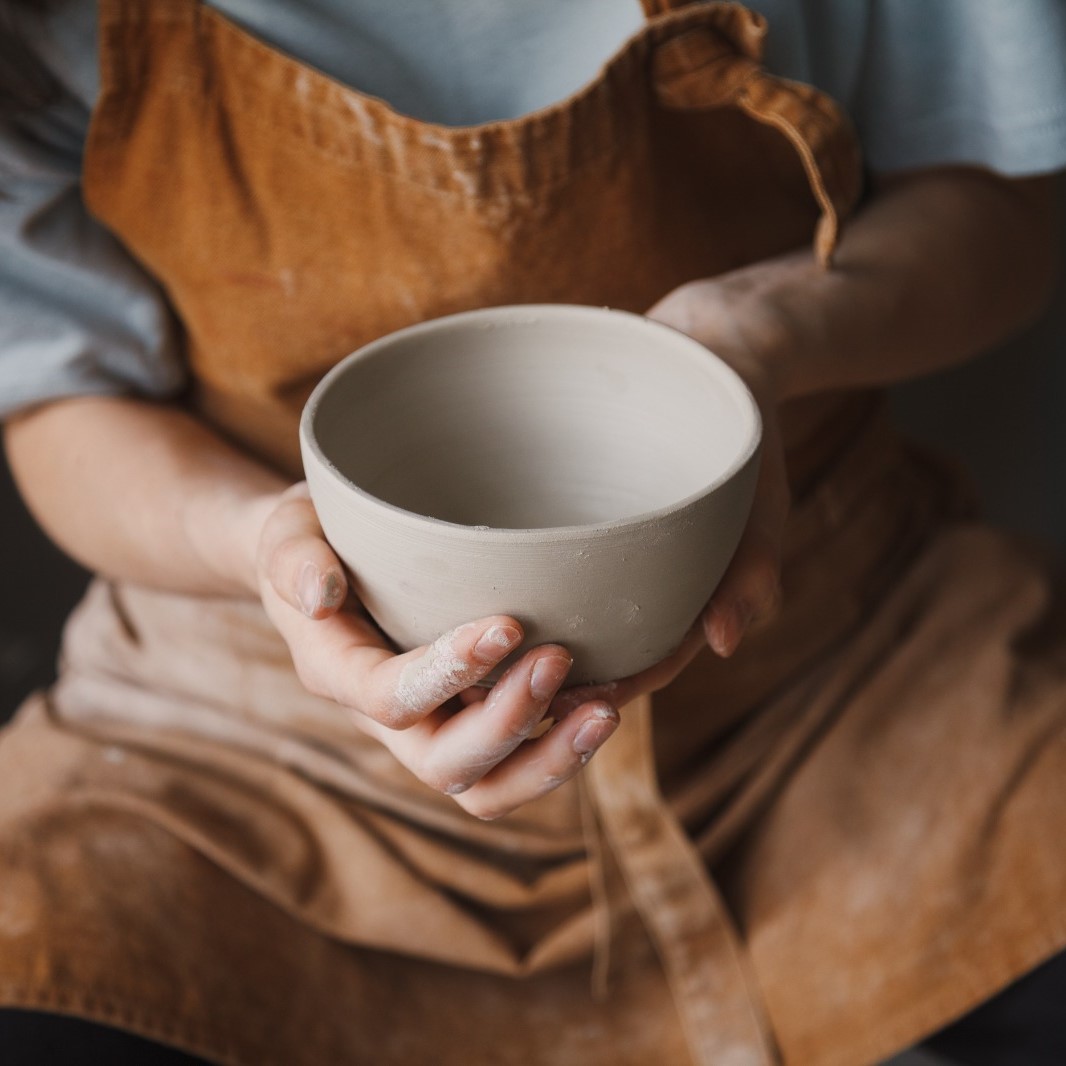
Encapsulated in the invention of ceramics is one of the most important and ancient craft techniques in human history.
A recent study has determined that pottery remains have been found in Xianrendong Cave in China that date back at least 19000-20000 years, a full 3000 years earlier than previously thought.
These researches challenged the framework set up by the belief that pottery was discovered 3,000 years later, in the Neolithic era, i.e., that in the social setting in which it was discovered there was already the knowledge to base the economy on agriculture and animal husbandry.
The turning point of ceramics
The use of pottery, according to this perspective, would have allowed the population greater exploitation of a wide range of plants and animals and an extraction of their components useful for nutrition through grinding and cooking, unthinkable without the use of pottery until that time.
The evidence of this discovery, which predates agriculture by 10000 years, leads us to think that the expansion of human beings' diet through the intake of hard-to-process and digest foods, such as rice in China, represents a very important moment in generating the need for domestication of wild plants, cultivating the land and practicing agriculture until the evolution to a more complex society.
Ceramics as an art form
Beyond the great importance on a functional and instrumental level of ceramics throughout the history of human beings, ceramics represents an absolute and stylish art form.
Painted pottery exported around the 3rd millennium B.C. from Anatolia, an area rich in clay soil, and from the Fertile Crescent to the European hinterland, mark the spread of an art form and the beginning of the evolution of pottery-making techniques that marked the artistic landscape of that era.
Between the 6th and 4th centuries B.C.E. large production centers arose in Greece, in the city of Athens, in Boeotia, and in the Italic soil, in Etruria and Magna Graecia.
There was a succession of adoptions of tools and techniques to facilitate the shaping, firing and decoration of pottery. In medieval times the potter's wheel was introduced, and ceramics were fired in kilns and sealed with a vitreous varnish. Major production centers were born on the Italian peninsula-Orvieto, Faenza, Siena-but none had the acumen to introduce kaolin into the process to make the final product as durable and hard as Chinese porcelain. In fact, it was not until 1708 that the German alchemist Bottinger invented the method for creating hard-paste porcelain with the addition of kaolin.
Some technical notes
In the production of handmade ceramics, different types of clays are selected depending on the project. The most common are sandy clay, fireproof clays selected to withstand very high firing temperatures, and kaolin.
Regardless of the type of clay used, it must first be cleaned of impurities through the curing process, then it is dissolved in water to be cleaned of salts, and finally the last impurities and coarser-grained particles are removed.
Before processing, air is removed from the clay, thus preventing cracks from forming, and Charmotte, a powder of already fired ceramics, is added to make the finished product very resistant to heat changes.
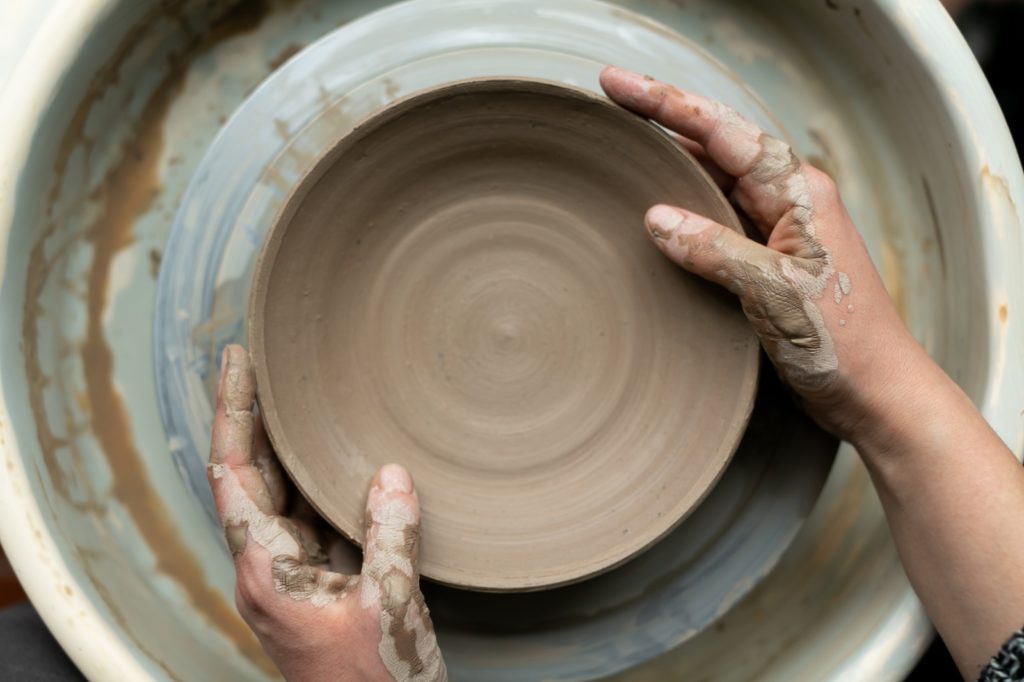
The compound is shaped in different styles and methods, but regardless of the style, it is air-dried before being fired. This is a key step in the success of the final object, as the durability of the product depends on this stage. It is then fired in special kilns that exceed 1,000°C. The temperature depends on the composition of the material, as does the firing time, which can last up to several hours.
After firing is complete, and once cooled, the ceramic object can be tested to prove its durability. This is the case with our ceramic pots for Bonsai, subjected to frost and antifreeze tests to test the material's resistance to low and high temperatures by the Research and Experimentation Center for the Ceramic Industry in Bologna, Italy..
